
Lawrence Directory Collections by Era
Lawrence is covered through a patchwork rather than one continuous city directory. Indianapolis runs provide the broad early framework. Polk volumes, Haines reverse books, suburban editions, and later county material overlap in some years and leave gaps in others. Always record the exact title, publisher, year, page, and access medium.
| Collection | Years | Where held | Access |
|---|---|---|---|
| Indianapolis city directories | 1855–1989 | IndyPL and partner collections | Digital scans, library databases, microfilm |
| R.L. Polk Indianapolis | 1902–1943, with gaps | Indiana State Library guide | Online, microfilm, or licensed database by year |
| Haines criss-cross | 1940–1979 | Indiana State Library holdings | Library access |
| Polk suburban | 1957–1979 | Indiana State Library guide | Check volume and year |
| Suburban directory series | 1957–1991 | IndyPL chronology | Library holdings vary |
| Marion County directory | 2001 | IndyPL chronology | Confirm holding before visit |
The Indiana State Library Marion County guide is the best year-by-year inventory. It flags online, microfilm, and licensed-database access, which prevents a missing web scan from being mistaken for a missing book.
Search Lawrence Directories Online
The Indianapolis City Directory Collection is a collaboration among IU Indianapolis, IndyPL, and the Indiana State Library. Its collection description spans published directories from 1855–2001. The interface supports keyword search, browse, and year selection, while an Internet Archive route reaches additional years.
OCR, the machine-read transcript, can misread initials, numbers, and street names. Search a surname variant, then inspect the page image. Save the volume year and page, not the scan upload date. If a year is absent, consult the State Library guide before concluding that no Lawrence city directory survives.
The digital collection interface exposes the browse and search routes for Lawrence directory work.
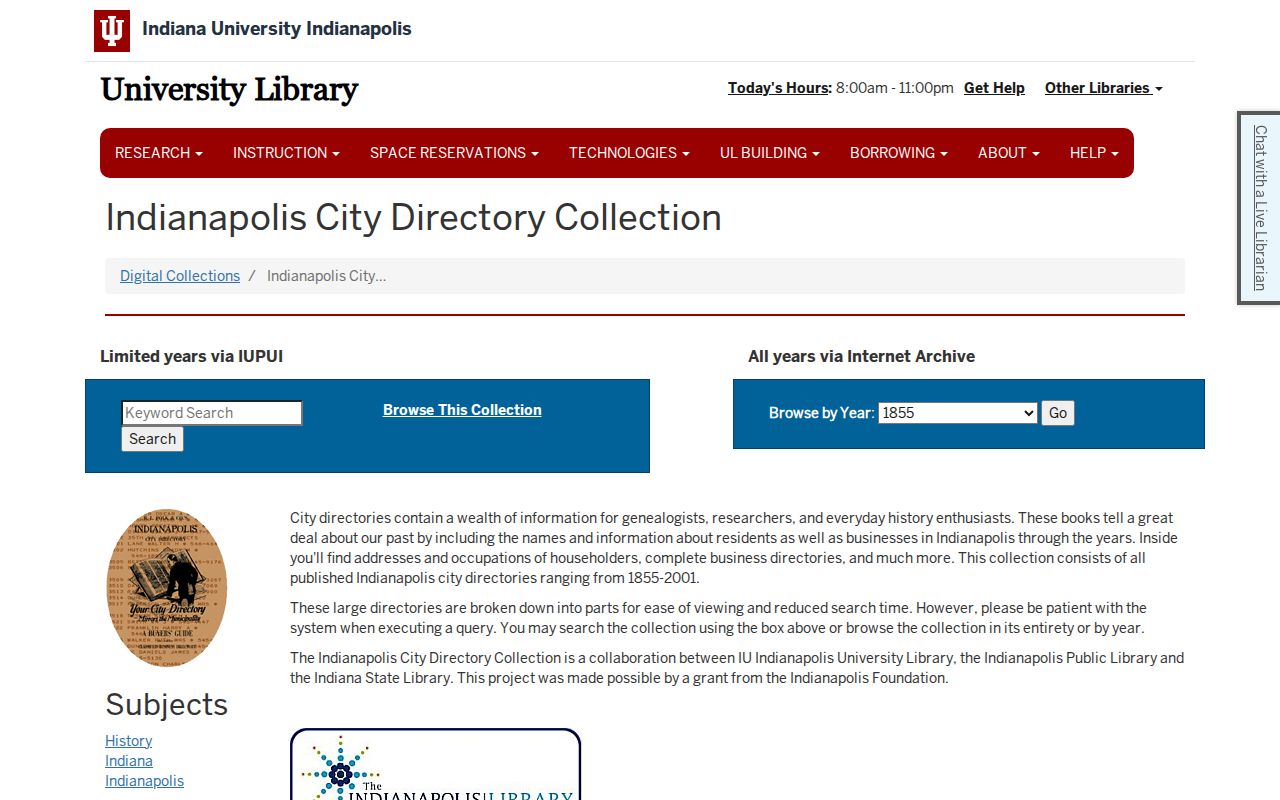
The year controls and item pages let a citation point to one edition and one scanned page.
Lawrence Polk and Haines Directories
R.L. Polk Indianapolis city directories cover 1902–1943 in the State Library inventory, with gaps and mixed access. Their alphabetical sections can show a name, spouse, occupation, employer, and residence. Haines criss-cross holdings cover 1940–1979 and reverse the search, allowing a reader to begin with an address and move to a printed name.
These formats should not be blended. An alphabetical Polk hit answers whether a name appeared in that edition. A Haines address hit answers what was printed at a location in that edition. Suburban Polk volumes begin in 1957 and add postwar Marion County context, but the series does not prove that every listed address fell inside Lawrence city limits.
Decode a Lawrence Directory Entry
A Lawrence city directory entry should be transcribed as printed before any spelling is corrected. Capture the title, year, edition, page, section, name, spouse notation, occupation, employer, and every address. Then identify whether the address marks a home, work site, boarding place, hotel, military post, or rural route.
| Printed name | Surname, given name, and initials exactly as shown |
|---|---|
| Household note | Spouse may appear in parentheses; widow notation may name a deceased spouse |
| Work detail | Occupation and sometimes employer or business address |
| Address | Home, work, boarding, hotel, route, or military-post wording |
| Source key | Publisher, year, edition, page, and alphabetical or street section |
- Criss-cross directory
- A volume or section arranged by address, often used to move from a street number to printed names.
- Householder index
- A list centered on the main named person associated with a household address.
- Abbreviation key
- The publisher’s legend for marks such as h or r; check it before interpreting an entry.
A mark can change meaning by publisher. Photograph or save the key page with the entry, and keep any uncertain reading in brackets.
Inspect a Lawrence Directory Sample
The inspected 1932 Polk Indianapolis directory page sits in a volume of 1,880 pages. Page 762 is in the alphabetical name section. Visible entries combine names with spouse notes, occupations, addresses, and h or r marks. The item also offers image navigation and an OCR transcript.
The scan shows why the image, key, and nearby lines matter. OCR alone can confuse a street number or letter, and an alphabetical page is not an assessor record.
Treat the entry as a 1932 association. Compare it with a street guide, nearby directory year, census, deed, or newspaper before merging it with another person of the same name.
Lawrence Library Routes to Directories
The Indianapolis Public Library Lawrence Branch, at 7898 Hague Road, provides database access, local reference help, and referrals to Central Library or the State Library. The branch opened in 1967 in the former Lawrence Post Office, moved to a permanent site in 1983, and reopened after renovation in 2020. That former-post-office origin makes the branch part of Lawrence’s own address history.
The branch is not a current resident registry. Ask staff for a specific year, publisher, surname, or old address. Central Library clipping files and partner holdings may add neighborhood, home, historic building, or newspaper context when a directory trail breaks.
The Lawrence Branch page is the local starting point for hours, contact details, and research help.
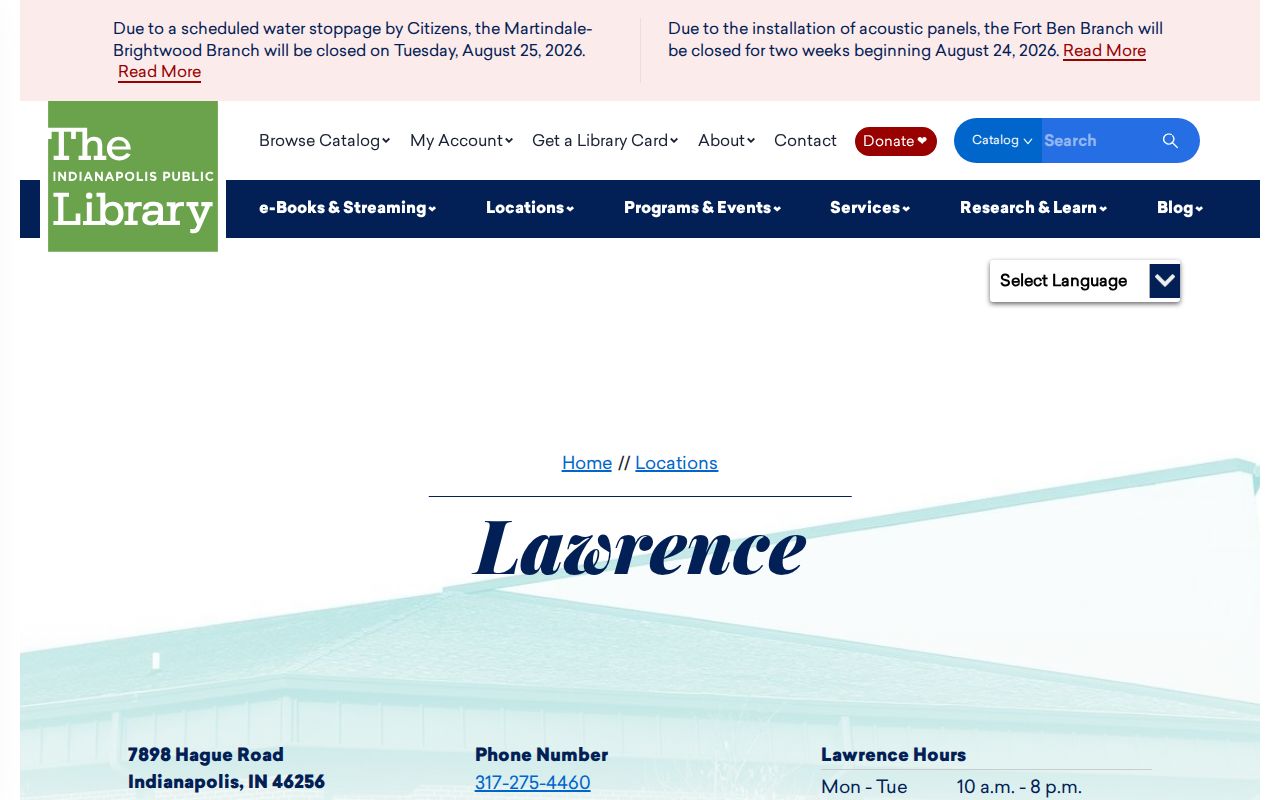
Its current service details help plan the first step before a referral to a larger historical collection.
Pair Lawrence Directories With House Records
IndyPL House History links directories with deeds, Sanborn maps, census schedules, clipping files, and newspaper databases. Sanborn maps on microfilm cover 1887–1950 through IndyPL, the State Library, and the Indiana Historical Society, with online access through IU Indianapolis. Use the map closest to the directory year.
A directory supplies a dated name-address link. A deed identifies recorded parties and legal land. A Sanborn map can show a structure footprint or use. None should silently replace the others. For modern address-keyed property work, use the Lawrence street directory workflow instead of stretching an old volume into a current record.
The house-history research page lays out the Lawrence source types that can corroborate a directory entry.
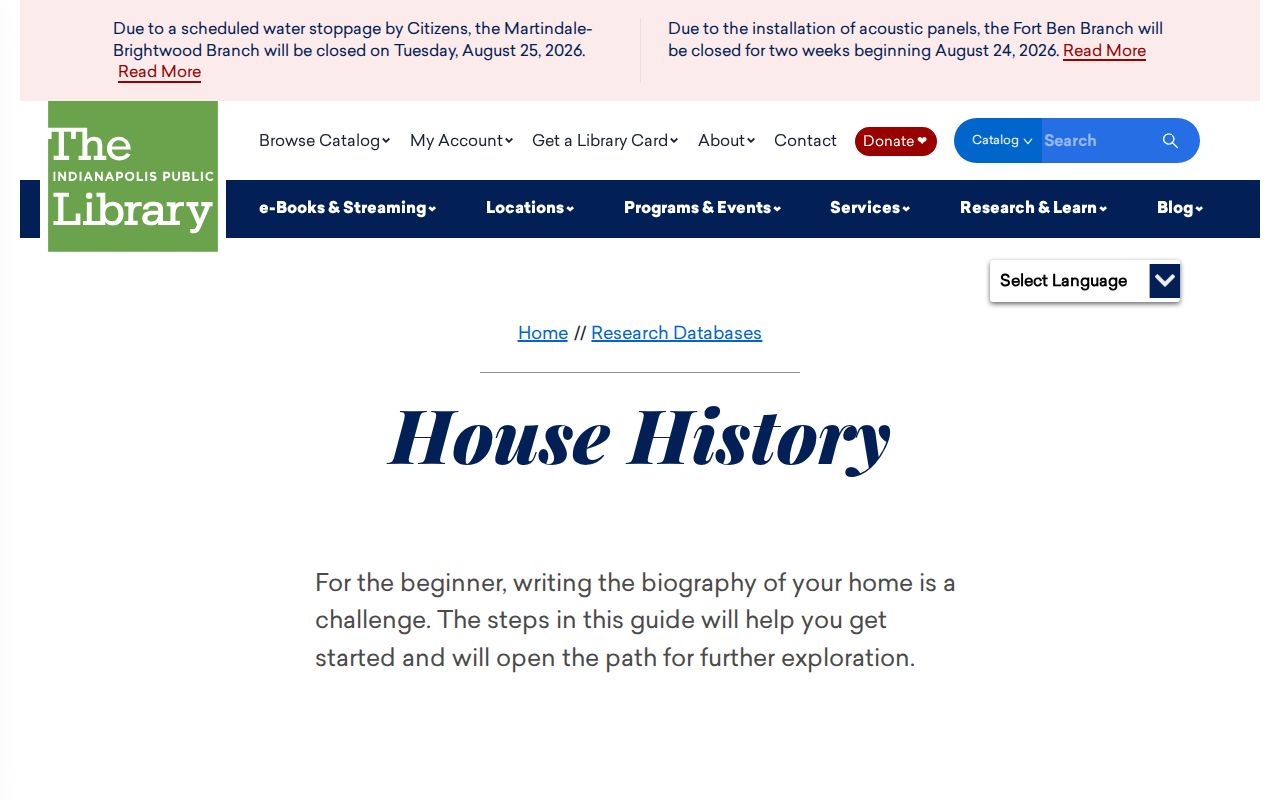
That mixed-source approach helps explain a move, renumbering, rebuilt structure, or gap between editions.
Growth Changed Lawrence Directory Density
Lawrence’s official history reports 1,048 residents in 1940, 1,999 in 1950, and 7,863 in the 1956 special census. That jump helps explain why postwar address and suburban directory coverage becomes denser. It does not mean every resident appeared, and the population totals should not be used to estimate missing names.
The dates also line up with overlapping source types. Haines begins in 1940, postwar Polk snapshots appear with gaps, and suburban directories begin in 1957. A household may shift between an Indianapolis title, a suburban volume, and a Lawrence postal or township label without making a clear move.
Search Lawrence Directory Place Names
Historical searches should include Lanesville, Lawrence, Lawrence Township, Fort Benjamin Harrison, and Indianapolis. Lanesville was platted in 1849, the Lawrence name was approved in 1866, and the military post brought a distinct address stream after its early twentieth-century establishment. Lawrence also remained separate from full Unigov consolidation in 1969.
Pre-1914 entries may lack a modern street address. Rural routes, post names, changed street numbers, and publisher boundaries can hide a match. Search surname variants and initials, then check maps or plats before translating an old label into a present parcel.
Extend Lawrence Directory Research
The IndyPL genealogy resources connect a city directory find with newspapers, census tools, and other family-history databases. The Indiana State Library’s online resources add Indiana Legacy, Hoosier State Chronicles, Indiana Memory, SHAARD, cemetery tools, and vital indexes. Its Genealogy Division holds more than 40,000 print items and offers research help.
No complete, fixed Lawrence obituary index was found in the official sources. Search newspaper databases, clipping files, Hoosier State Chronicles, and Indianapolis Star holdings instead. Record the newspaper title, date, and page. An obituary can explain a disappearance from a directory, but it should not be assumed when a person is merely absent.
The library genealogy page shows the next sources available after a Lawrence city directory match.
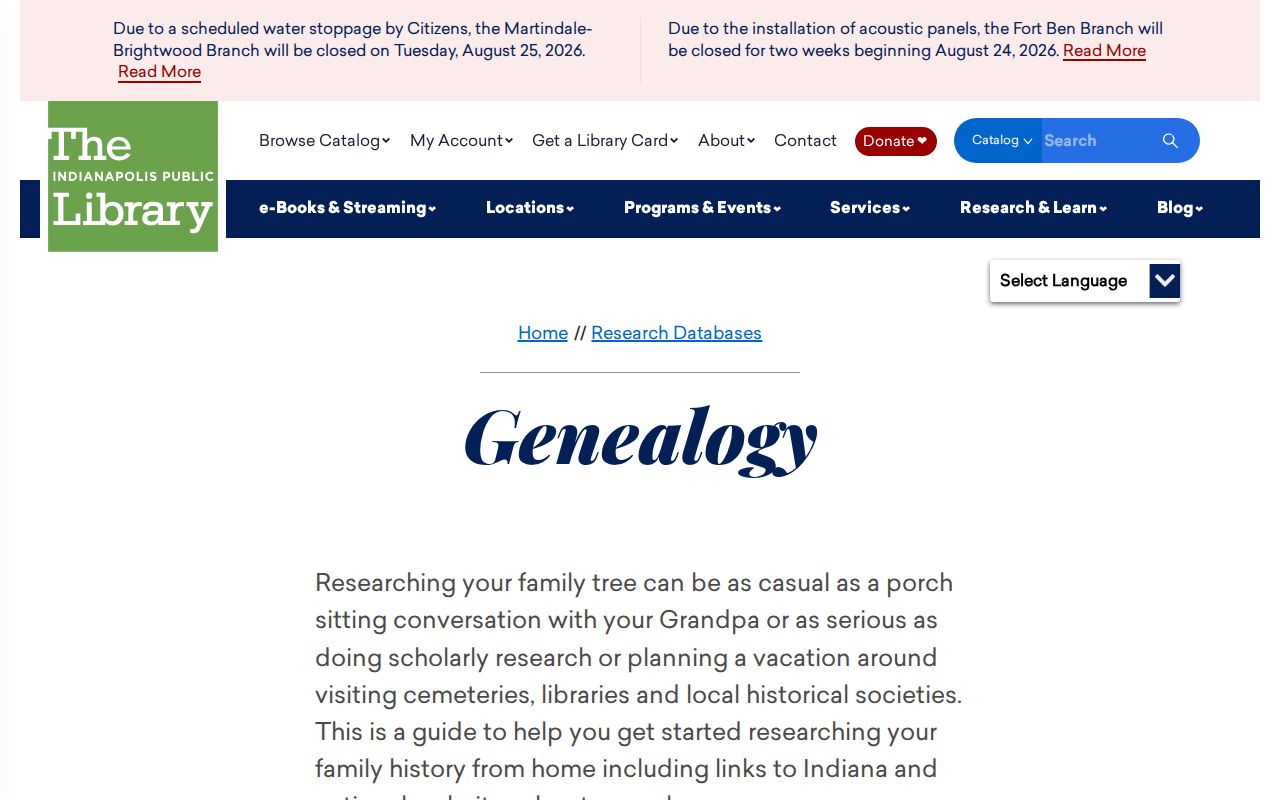
Those companion records can distinguish same-name residents and explain gaps between printed years.
Trace Family Through Lawrence Directories
Family history is strongest when each city directory entry remains tied to its edition. Follow one person across time, but require a second identifier such as spouse, occupation, middle initial, or verified address before joining same-name entries.
- Find the earliest likely name entry and save the title, year, page, and printed spelling.
- Search the prior and next available editions, recording moves, work details, spouse notes, and omissions.
- Use a Haines street section or other reverse index to check the address and nearby printed households.
- Pair directory years with federal census years, deeds, Sanborn maps, and newspaper dates.
- Close the trail with an obituary, cemetery record, probate file, or later directory only when the identifiers agree.
Disappearance can mean death, a move, nonlisting, missed canvassing, military service, or a gap in the surviving run. State the uncertainty. A Lawrence city directory is evidence from one publication period, never proof of current residence.